From around the world to Central Otago

Published: April 1, 2026

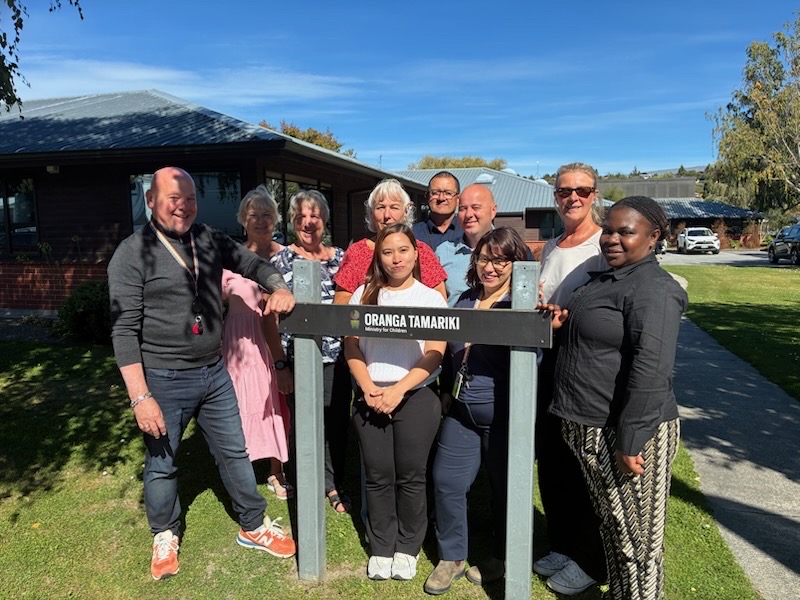
The office is made up of 19 kaimahi, including 10 social workers, from places as far afield as England, Wales, Philippines, Romania, Zimbabwe, Samoa, and right here in Aotearoa.

The smiling faces of Oranga Tamariki’s Central Otago site

Site manager Chris Pickering says the mix of backgrounds has shaped not only the work culture but also the way the team connects with whānau and with one another.  

The diversity brings a wealth of different world views, knowledge, skills and experiences. Chris says this ensures a responsiveness to the fast-growing multicultural population that calls Central Otago/Queenstown Lakes home.

Have a read below about the diverse voices that shape social work in this large rural region, and how the work they do can vary from that in an urban area.

From a gap year to a new lifestyle

Mandy James - Care & Protection Social Worker.

For Mandy, moving from rural Wales to rural Central Otago started as a “late‑life gap year”, but quickly became something much bigger.

After a family event prompted her and her husband to change direction, they packed up their UK home, rented it out, and arrived in Alexandra on a work visa. 6 months later, they were house‑hunting.

No stranger to rural practice as it was her work back in England, Mandy’s car remains her mobile office, complete with back‑to‑back visits, phone meetings, and the most glamorous of all: carefully planned toilet breaks.

What makes Alexandra different, she believes, is the closeness of the team. She says it's the way colleagues double up on visits, take notes for each other, offer perspective, and provide peer supervision while driving between towns.

“It’s about making the most of the time you have, where and when you have it,” she says.

Finding the joy in the small things

Madrone Phoenix - Care & Protection Social Worker.

Madrone arrived in Alexandra all the way from Vermont, tucked up in the northeast of the United States along the Canadian border.

She joined Oranga Tamariki in January this year and was immediately struck by the team’s warmth.

She had dreamed of living and working in New Zealand for years, but it was meeting the Alexandra team that sealed the deal.

"They were kind, welcoming, and genuinely supportive,” she says, and that made the decision easy.

Working in a small community has brought a sense of grounding for Madrone. Caseloads are manageable, relationships feel authentic, and she can see the direct impact of her mahi.

While adjusting to narrow rural roads has been a unique challenge after a lifetime of wide American highways, she says the landscapes make every drive feel "a little magical" and that it's part of what makes rural social work unique and rewarding.

Working toward the same goal

George Terry - Care & Protection Social Worker.

George’s journey spans continents. He grew up in Romania, moved to the UK at age 18, and is now building a life in New Zealand with his husband. Drawn by the alignment of both lifestyle and values, he says he joined Oranga Tamariki to work more closely with families at a pace that felt safe and meaningful.

George says what he appreciates most about his mahi in Alexandra is the genuine connections that form in a small community.

You get to see the impact of our work more clearly over time. There’s a sense that everyone is working together toward the same goals.

George says rural challenges do exist, such as limited specialists and large travel distances, but he embraces the opportunity to problem‑solve alongside other professionals.

And once again a clear winner: George also believes that the Central Otago scenery makes it all worthwhile.

The power of showing up

Claire Scherp - Resource Worker.

Claire describes herself as the “pesky annoying questioning person”, which we could translate to having an unmistakable passion for people and her community. Originally from Murihiku, Southland, Claire has spent more than two decades raising her whānau in Central Otago.

She's now working toward her social work degree, and drawing on lived experience: the tougher years of parenting when she felt alone, and the drive to make sure others never feel the same.

She agrees that working in a small community comes with challenges. Scarce services, isolated rural pockets and long travel are all factors, but she says that also means collaboration can thrive when everyone comes to the table.

What has struck her most is the Central Otago team’s culture. “There’s a sense of safety to be who you are. People can disagree, but they still value each other. They welcome newcomers with genuine support.”

A second chance down South

Salati Uiti - Youth Justice Social Worker.

Born in Porirua and of Samoan and Tokelauan descent, Salati began her Oranga Tamariki journey in Wellington before life took her south not once, but twice.

When her husband’s glazing company expanded to Cromwell, they moved their family to Central Otago, where Salati took up a part‑time role in youth justice. When things didn’t quite pan out for her husband’s work, the pair briefly returned to Wellington.

But they were determined to give it another shot down south, and this time the move stuck.

“We truly believe this was the best decision for our family,” she says.

Coming from a busy metro region, Salati values the lower caseloads that allow for deeper, more intentional work with rangatahi and whānau.

The biggest challenges for Salati are the more limited services and long distances, which can sometimes take hours each way.

Salati says although the distances might be longer, the Central Otago scenery beats the Wellington commute every time.

“It makes every drive worth it.”